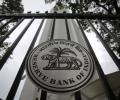
By no means do economists see the Reserve Bank of India stop at just a 25-bp cut. Some of the economists such as Soumyakanti Ghosh of State Bank of India are of the firm view that rates have room to fall by a total of 75 bps in the current financial year, starting with 25 bps in the August 7 policy.

Credit to priority sectors as well as small and medium industries will be discussed to find ways to accelerate economic growth.

Apart from easing the NPA pressure on domestic banks, the RBI's move can allow companies to raise cheap, long-term loans easily now.

Maharashtra and Delhi lead the pack of states in terms of absolute number, with 142,425 and 125,937 closed companies, respectively.

Revenue foregone on account of corporation tax exemptions is estimated to grow by 16 per cent in 2018-19 (FY19) versus 8.7 per cent in the previous year and 12 per cent in 2016-17, show the Budget documents.

Vodafone Idea, the promoter of Aditya Bira Idea Payments Bank, said in a notification to the exchanges late on Friday that the board of the bank approved winding up the business, subject to approval from the Reserve Bank of India.
Nirmala Sitharaman has designed the revenue mix in such a way that while Centre's share in taxes would grow a massive 25 per cent, states' share would grow a dismal 6 per cent.

Consumption of petrol and diesel will contribute more than half of the Centre's exclusive share in GST in FY20, reports Abhishek Waghmare

A well-established tax system would have a predictable buoyancy - how fast the collections grow as a proportion to the growth of the economy. But that is not the case with GST. It is still undergoing substantial changes as the government responds to structural as well as administrative glitches.

The government planned to borrow 10-15 per cent of the total borrowing offshore. That works out to at least Rs 71,000 crore, or about $10.4 billion at Friday's exchange rate.

While the bond market is relatively conservative about their interest rate expectations, the currency market seems to be projecting that interest rates should be much sharper

A lack of adequate disclosures raises the financing costs of corporate firms, especially sub-investment grade ones, and keeps the capital markets small, believes RBI deputy governor Viral Acharya.

In absolute terms, the CAD stood at $4.6 billion in the current fourth quarter, compared with $13 billion in the year-ago quarter and $17.7 billion in the third quarter of fiscal year 2018-19.

The RBI panel has also recommended a government-sponsored 'fund of funds' of Rs 10,000 crore to support the venture capital and private equity firms investing in the MSME sector.

NBFCs are mainly dependent on funding their operation from their own cash flows.
In the last three years, public sector banks have responded to the RBI's policy rates more strongly than private banks.

The reform priorities are clear: enhance savings, improve productivity. Just 25 basis points of moving interest rate up or down would not boost investment: Former RBI Governor Y V Reddy.

There is a near consensus that at least a 25 basis points cut, if not 50, can be expected in the June policy.

The bond market expects at least 25 basis points cut in the June 6 policy.

People are interested in the strength of India's economy, the country's stability, and the opportunities, says Stuart Tait, regional head of commercial banking, Asia-Pacific at HSBC.
 © 2026 Rediff.com - Investor Information - Advertise with us - Disclaimer - Privacy Policy - Sitemap - Feedback - About us - Terms of use - Grievances